




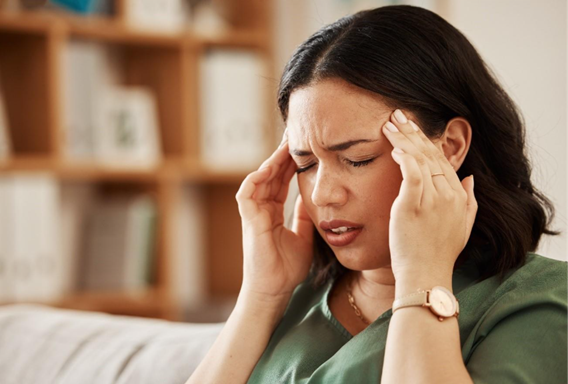
Almost everyone has had a bad headache, but for the millions of people living with migraine, the experience is far more debilitating than simple pain. A migraine is a complex neurological condition that brings intense throbbing, pulsing pain, and a host of disruptive symptoms that can shut down your daily life for hours or even days.
If you or a loved one is struggling with recurrent, severe headaches, you don’t have to simply “tough it out.” Understanding migraine is the first step toward effective management.
Migraine is a Full-Body Event
A migraine attack is not just pain in the head; it’s a cascade of neurological events that can affect your entire system. This is why people often experience symptoms across four distinct phases:
The Warning Signs (Prodrome)
This phase can start hours or even a full day before the head pain hits.
It’s your body giving you subtle clues:
Mood Swings: Feeling unusually depressed, irritable, or strangely energetic.
Physical Changes: Neck stiffness, frequent yawning, or craving specific foods.
The Visual Warning (Aura)
About one in three people experience an aura—a temporary sensory or visual symptom that occurs just before or during the headache.
Visual: Seeing bright spots, flashing lights, zig-zag lines, or temporary blind spots.
Sensory: A tingling sensation or numbness, often moving from a hand up to the face.
The Attack Phase
This is the most painful and recognizable phase, typically lasting from four hours to three days.
You may experience:
Intense Pain: Moderate to severe throbbing or pulsing pain, often focused on one side of the head.
Extreme Sensitivity: Sensitivity to light (photophobia) and sound (phonophobia).
Nausea & Vomiting: Feeling sick to your stomach, which can make it hard to function.
Aggravation: Pain that gets much worse with routine movement or physical activity.
The Migraine Hangover (Postdrome)
After the pain subsides, you may feel completely drained, exhausted, and generally unwell for up to a day or two, characterized by fatigue and difficulty concentrating.
Common Triggers: Knowing Your Enemy
While the exact cause of migraine is genetic and complex, attacks are often set off by specific external or internal factors known as triggers. Identifying yours is the most effective form of self-management.
These triggers fall into a few key categories:
Lifestyle Triggers
- Stress and anxiety are top triggers for many people.
- Disrupted sleep patterns (too much or too little sleep).
- Skipping meals or fasting, leading to low blood sugar.
- Dehydration.
Dietary Triggers
- Alcohol, especially red wine.
- Too much or too little caffeine.
- Certain foods like aged cheese, processed meats, and chocolate.
Environmental Triggers
- Exposure to bright or flickering lights.
- Loud noises or strong, lingering smells (like perfume or chemicals).
- Sudden changes in weather or barometric pressure.
Hormonal Triggers (for women)
Fluctuations in estrogen levels, especially around the time of the menstrual period or ovulation.
A great first step is to consistently keep a migraine diary to track when attacks happen and what might have triggered them.
Finding Clarity and Relief at Aastha Hospital
Migraine is a treatable condition, but the wrong approach—like relying solely on over-the-counter pills—can actually make your headaches worse.
True, effective relief requires the expertise of a specialist who can provide a personalized, comprehensive treatment strategy.
At Aastha Hospital, our Medicine Specialist focus on two key areas:
Acute Treatment: Specialized medications taken at the first sign of an attack to stop or significantly shorten the episode.
Preventive Treatment: Medications or therapies taken regularly to reduce the frequency and severity of your attacks over time.
We utilize advanced diagnostic tools and the latest treatment protocols to confirm your diagnosis and create a plan tailored to your lifestyle. We offer a supportive environment where your symptoms are taken seriously, and you are given the tools to manage your condition effectively.
Don’t let migraine steal your best days. If you are experiencing frequent, debilitating headaches, it’s time to seek expert help.
(Dr. Prateek)
MBBS, DNB (Internal Medicine), MRCP Part-1 (England).
Consultant Medicine